26/002
Kika Brockstedt
Co-founder
Copenhagen
«The building industry in itself is an enormous jungle of obstacles — outdated, conservative, not digitised, fragmented, risk-averse — for a new business category entering the market all these factors are tough to tackle.»
«The building industry in itself is an enormous jungle of obstacles — outdated, conservative, not digitised, fragmented, risk-averse — for a new business category entering the market all these factors are tough to tackle.»
«The building industry in itself is an enormous jungle of obstacles — outdated, conservative, not digitised, fragmented, risk-averse — for a new business category entering the market all these factors are tough to tackle.»
«The building industry in itself is an enormous jungle of obstacles — outdated, conservative, not digitised, fragmented, risk-averse — for a new business category entering the market all these factors are tough to tackle.»
«The building industry in itself is an enormous jungle of obstacles — outdated, conservative, not digitised, fragmented, risk-averse — for a new business category entering the market all these factors are tough to tackle.»
Please, introduce yourself and the project you are working for/on…
My name is Kika Brockstedt and I am the Co-founder of revalu. Over the last 3 years my team and I have been building a company on a mission to drive better informed material choices across the building industry. Today, we are a European-wide material platform, empowering professionals across the building industry to search, specify and document their material choices.
Our mission is to be a central material hub to push today's material mindset and transformation, to help spread knowledge and help companies and individuals make more informed choices. With resource scarcity, climate change and the current macro / micro economics it's an urgent topic but also a highly complex one as the building industry is very fragmented and every stakeholder has their own needs.
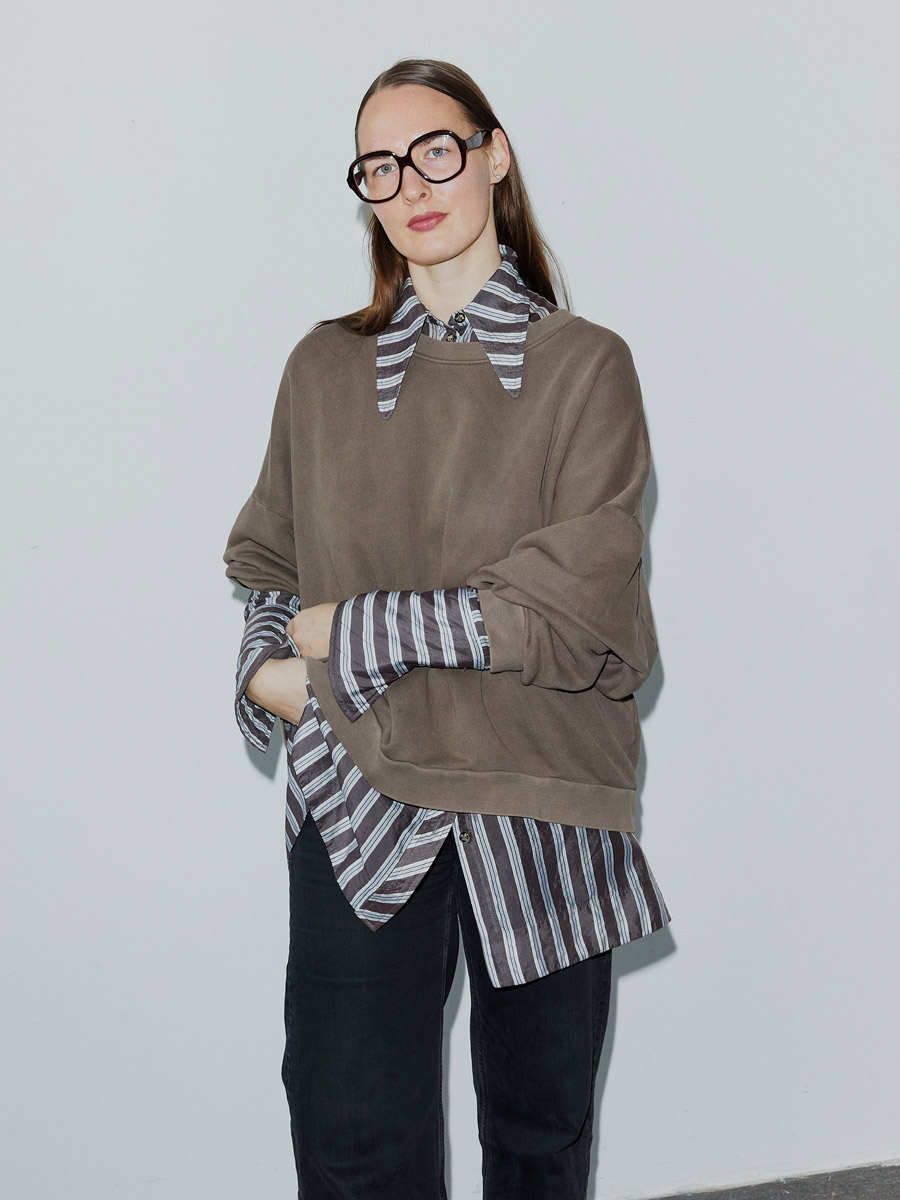
Kika Brockstedt – © Dennis Morton
How did you find your way into the field of architecture and/or the extended field of building transformation you are working and navigating in now?
I think I kind of stumbled into it :)
With my education and professional background, I have always worked at the intersection of strategy and creative development. Over the years I worked with different clients and industries, but for some time it was very focused on innovation and future housing projects with IKEA and SPACE10.
As I am based in Copenhagen, I was surrounded by many architects in my network. So when we started developing our idea, we could see that there was something shifting across the building landscape — the need for evaluating materials early on as well as across the design stages, the need for data and transparency across the supply chain and seeing a transition towards mandatory CO2 limits per square metre of buildings. So it was clear that our platform needed to focus on solving multiple challenges to be able to become more future-proof.
What are your experiences co-founding the platform revalu? You built it up from scratch – how does the process of creating the platform/business look like?
I think building up an operational business, a digital platform and on top of that within this industry — comes mostly with challenges. The building industry in itself is an enormous jungle of obstacles — outdated, conservative, not digitised, fragmented, risk-averse — for a new business category entering the market all these factors are tough to tackle.
Luckily, we have been working very closely with the industry, mostly “front runners”, who provided us with a lot of feedback and insights which enabled us to continuously evolve our product. We managed to build an incredible network of mission-driven companies and humans who are really walking the talk. And even though things take time and patience, I do see a shift also across the more “mainstream” market — there is more interest and push towards transitioning old practices and routines.
I think one of the biggest challenges is to find a balance between being radical and mainstream, because there is urgency yet at the same time the industry moves at its own pace. It's important that we move away from doing business as usual but it takes time to “win over” the majority.
revalu is focusing on pushing a “new norm” of materials. Why did you pick these topics – and why do you consider it important?
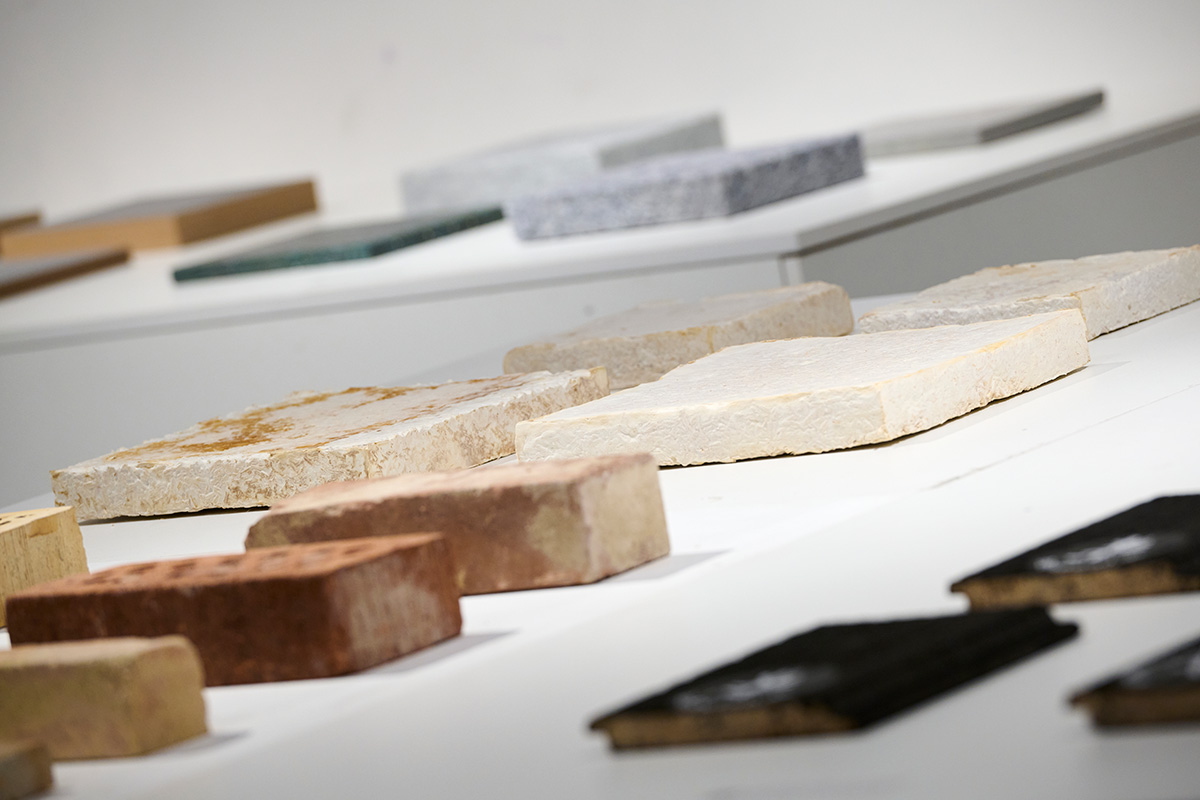
We like to call it a “new norm” because calling it sustainable or low-carbon can be limiting and sometimes also misunderstood. There are so many diverse material solutions out there, many of which used to be a norm for centuries and then disappeared due to industrialisation, so essentially they are “re-discovered”. And others are of course completely new, advanced through today's technology. Spanning from earth-based, bio-based, recycled to new innovations, our goal is to make all of these solutions visible and help them get into the market — because it's still a huge hurdle for a new kind of material to be taken seriously.
Another reason why I believe it's interesting to look at this wide palette of solutions, they all go beyond this vision of “low-carbon” materials, because oftentimes they have many other benefits if we look at sustainability from a more holistic perspective. For example, they have more health benefits due to their natural properties or perhaps they are more local — which can be a big advantage from an economic and social benefit point of view.
How would you characterise the city where you live and work? And how does this context influence your work?
I live and work in Copenhagen, which is of course a great place when it comes to the topics of architecture, innovation and sustainability. Many of the “front-runners” we work with are situated here. And currently Denmark has more strict regulations than most other countries across Europe, with an ambitious plan moving forward. All of these factors make it a great testing ground and there is a willingness to push the transformation within the industry.
What does your desk/working space look like at the moment?
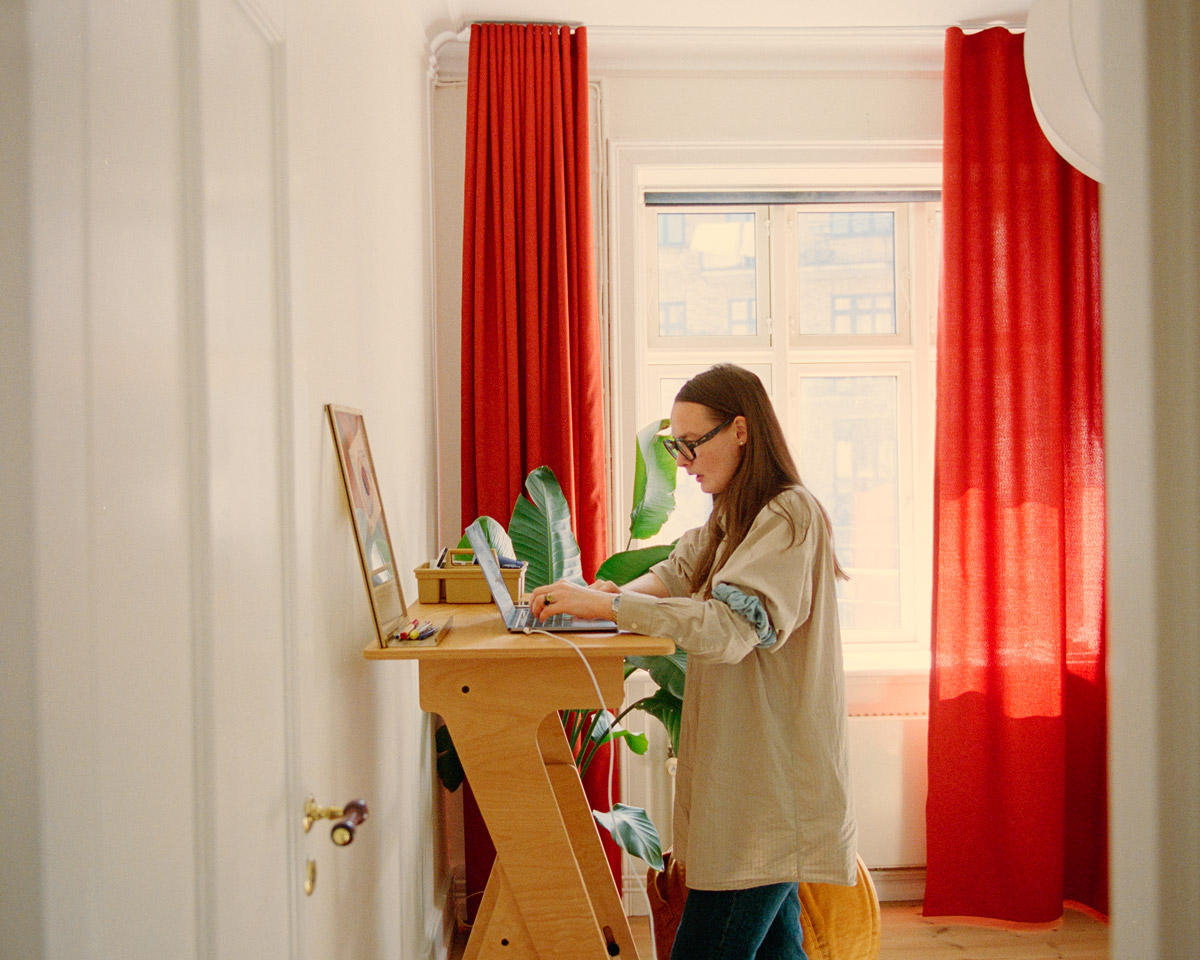
Kika Brockstedt – © Kasper Kristoffersen
Are there other institutions/businesses, which you perceived as role model/good example? How do other institutions/businesses influence/ formats your work? How and what did/do you learn from them?
One of my biggest role models is Atelier Luma — a design and research laboratory, a production workshop and a network of multidisciplinary experts — looking into bioregional materials amongst many other things.
We collaborate a lot with research labs, universities and different institutions as our aim is to really centralise all these innovations and knowledge out there — to make it more accessible and scalable. As a digital platform, we are now working on many collaborations that are very physical — to bridge that gap and provide an additional data layer.
What needs to change in the field of building/architecture according to you? How do you imagine the future?
I think overall there needs to be a shift in mindset, towards everything. How we consume materials, how we design, how we build and how future generations should interact with the infrastructures we plan today. Solutions in general should be more local and context specific, buildings should have multi-purposes and they should be built to last. And if for some reason they should not last, then at least we need to plan for disassembly so that the components will last and live on.
If there were one skill you could recommend to a young person to study in depth at school/university: what would it be and why?
I think there are two skills that kind of go hand in hand, Collaboration and Empathy.
Learn to work with a team and as a team — we will only achieve true changes through effective collaboration. Unfortunately many universities do not teach this but it's important to be aware of this, since the real world is about cooperating with others and also learning to compromise.
This leads to the other skill, Empathy. Especially when working on an ambitious mission, it takes many stakeholders to get on board. Each stakeholder will have their own needs and priorities. In order to find solutions together, it's important to put yourself in someone else's shoes, to understand their pain points and needs and speak their language. This will always bring you further than trying to argue your point.
What person/collective or institution do we need to look into right now?
I am a big fan of Bio-Fabrique Vienna. Based on the bioregional design approach of Atelier LUMA, it is a pilot that is being jointly developed to convert unused local resources into materials for architecture and design. So here there are many exciting materials currently being explored and developed from different regions around Vienna to serve the industry moving forward. It's again a wonderful example of different stakeholders coming together to shape the transformation that is required to move forward together.
Project
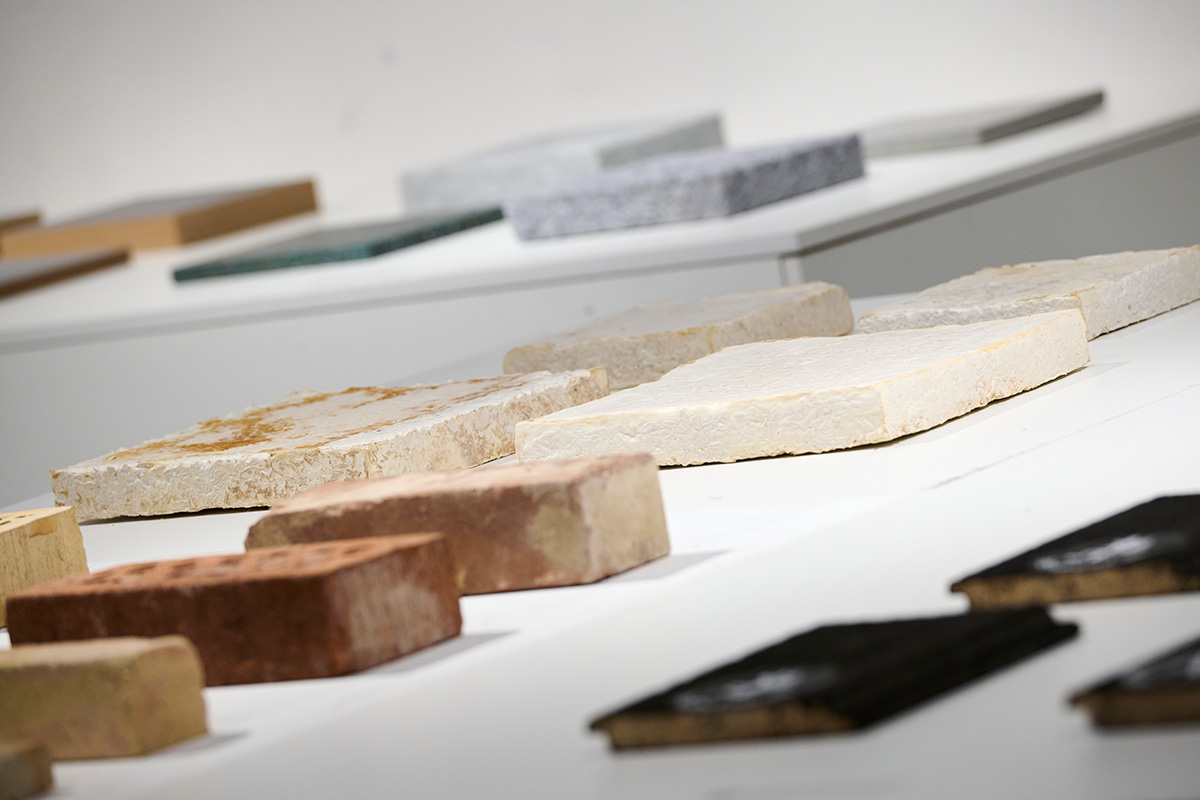
Material Transformation Exhibition
Architects@Work
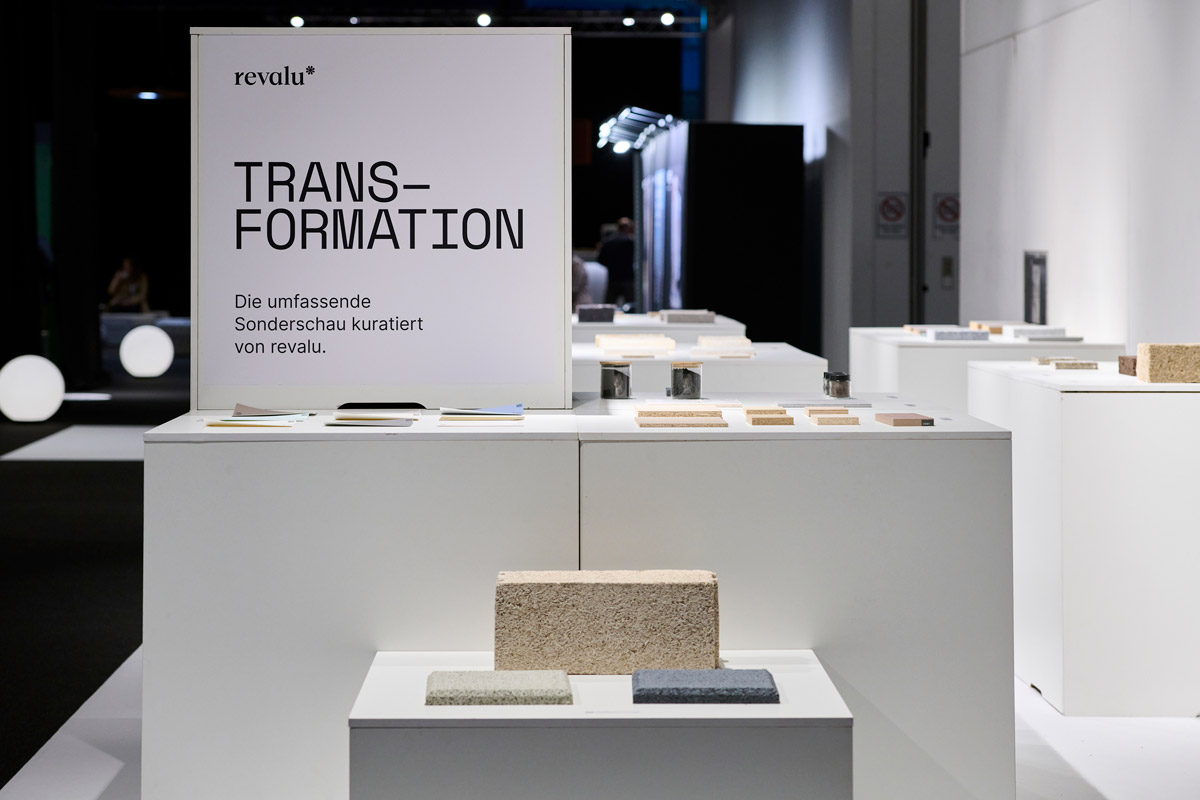
We are curating the Material Transformation Exhibition for Architects@Work, this was the curation we did in Zurich, in May. Now we are looking forward to expanding this across the next events in the DACH region where we will be featuring many wonderful and new materials. This exhibition and curation of materials is also accessible in our digital library on the platform.
Material Transformation Exhibition
Website: platform.revalu.io
Instagram: @revalu.io
Photo Credits: © Kika Brockstedt Portrait (Dennis Morton)
Kika Brockstedt / Workspace (Kasper Kristoffersen)
Architects@Work Exhibition (Nikki Jost)
Interview: kntxtr, kb, 01/2026