26/008
Black Creative Builders
Architectural Network
Global
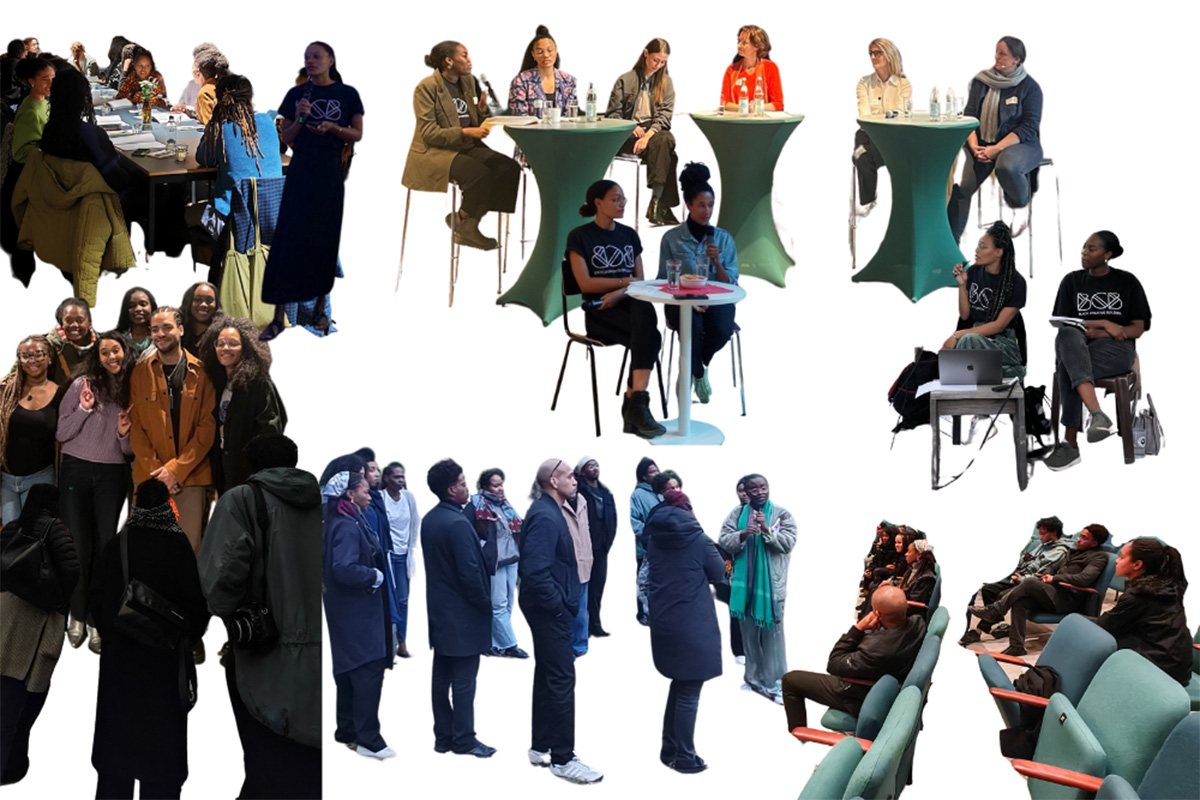
«Working as a group was never just a practical choice but a necessity.»
«Working as a group was never just a practical choice but a necessity.»
«Working as a group was never just a practical choice but a necessity.»
«Working as a group was never just a practical choice but a necessity.»
«Working as a group was never just a practical choice but a necessity.»
Interview responses by Catharina Meier, with contributions from Madina Scacchi
Please, introduce yourself, your project and your goals.
We are Black Creative Builders (BCB), a network of young Black professionals working in the building industry, founded in 2020. Our members span a wide professional range, from construction, planning and spatial design to interior design, architecture and urbanism.
Today, BCB counts over 60 members based in Germany, France, Switzerland, Luxembourg, Belgium, the Netherlands, Austria, Portugal, England, Ethiopia and Togo. Their professional backgrounds are equally diverse, including architects, architecture students, urban planners, bricklayers, building services engineers, interior designers, project managers, researchers, site supervisors, etc.
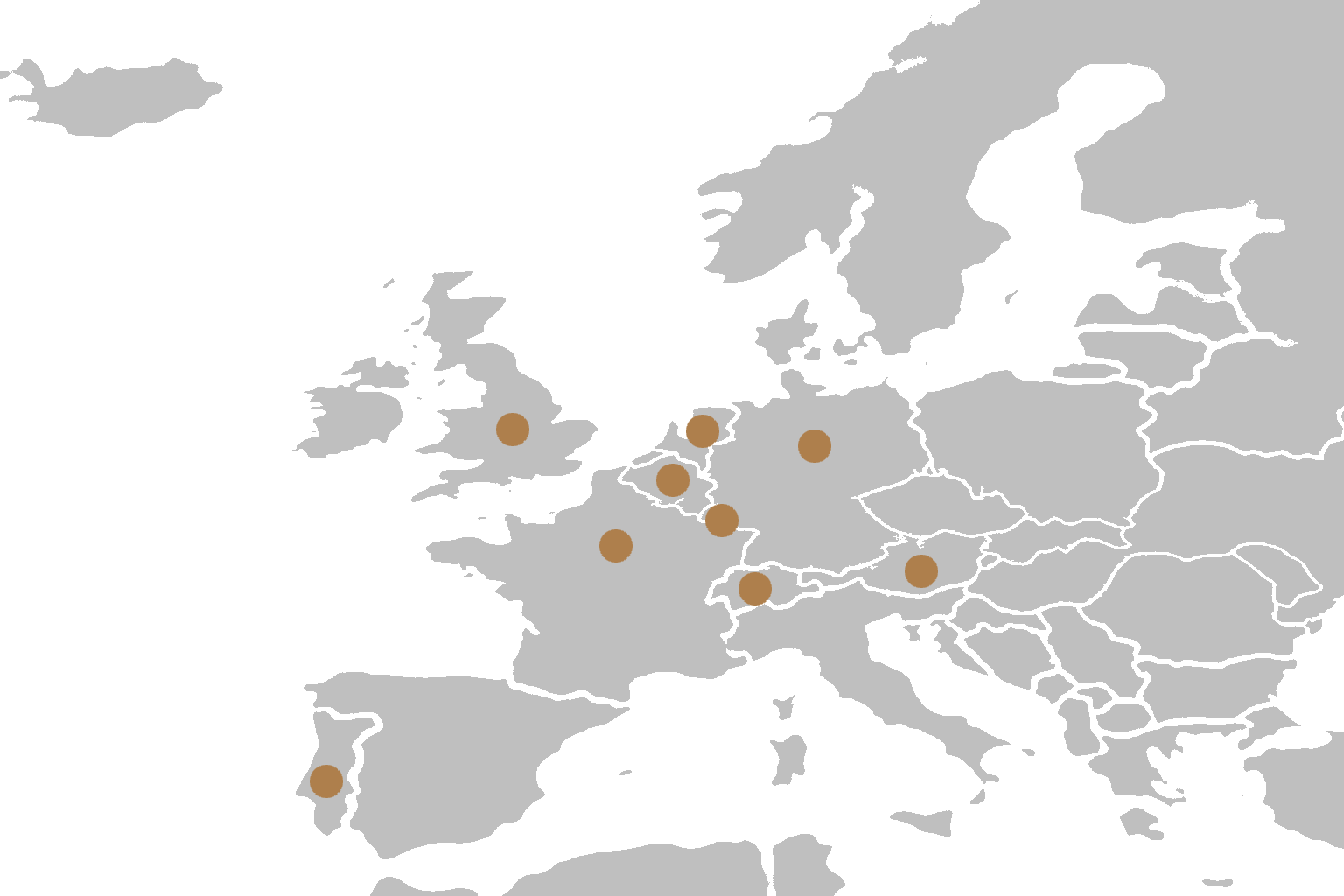
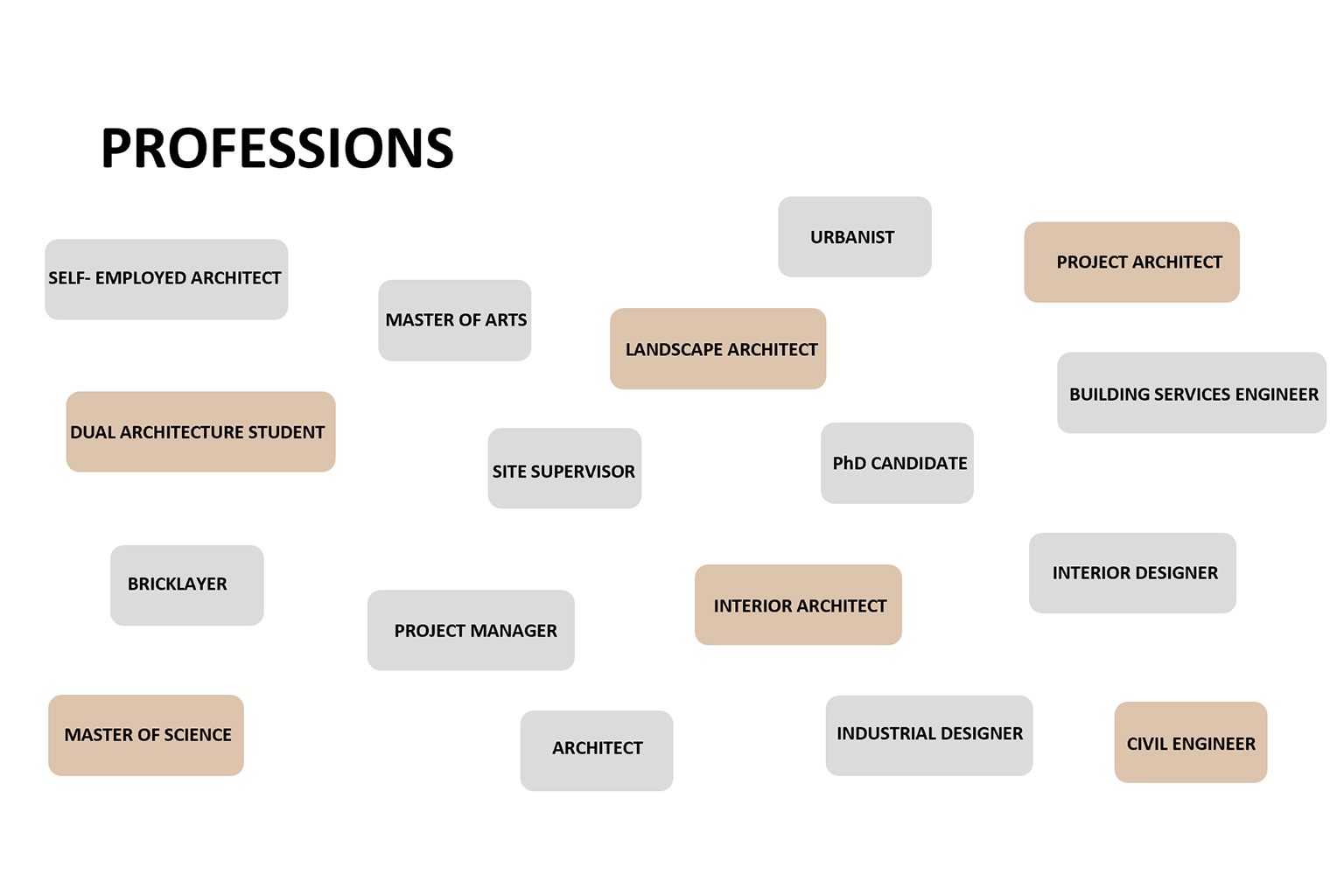
BCB Member’s countries of residence in Europe and professions
At the core of the network, seven members take on different organizational responsibilities, most of them based in Berlin, with others in Munich and Hastings. Our BCB workspace unfolds across cities and situations: from our own desks to co-working spaces, cafés and rooms generously borrowed from other organizations. Sometimes it’s a restaurant table, sometimes a shared screen. What connects these places is not their architecture but the exchange they enable. Our office moves with us, fluid and collective,, collective and stays grounded in collaboration. It reflects the way we work, rooted in community and conversation rather than fixed space.
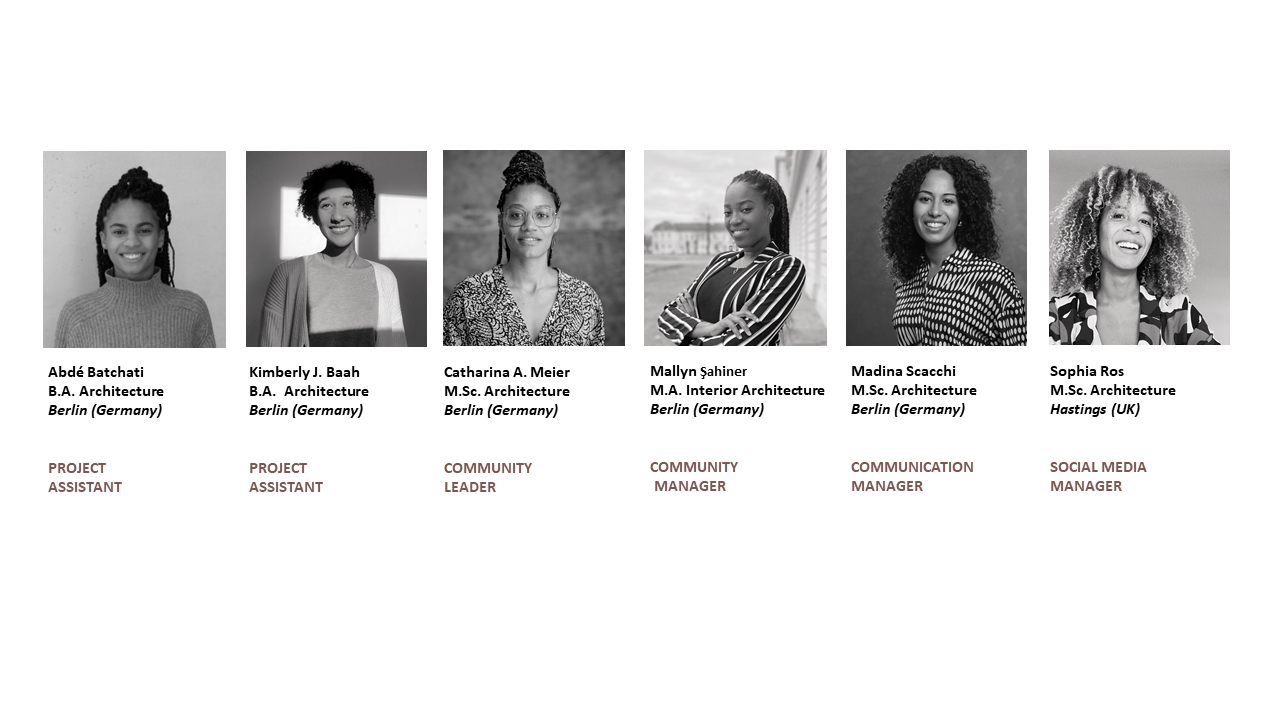
BCB Core Team Members (2025). Not all members pictured.
Our main goals are:
- To increase representation: We aim to raise the visibility of Black professionals, showcase Black talents and strengthen our position within the field. Lack of representation, especially of Black female architects, remains a major challenge. A survey conducted among our members in 2020 revealed that many had long been searching for such a network and some had joined other professional organizations that did not address their needs.
- To promote diversity: It is equally important to address why visibility is lacking. Structural and institutional racism within our professions continues to affect recruitment processes and workplace cultures. We use our network to raise awareness, create dialogue and push for change, while also encouraging and supporting future generations of Black professionals.
- To be active in German-speaking spaces and beyond: While professional Black networks are well-established in the US and UK, they are still rare in German-speaking countries. BCB fills this gap, offering resources and community in Germany while connecting members from across Europe and Africa as well.
- To create safe spaces: We provide a platform where Black professionals can share experiences, seek advice and support one another in cultivating inclusive, discrimination-free environments. Through workshops, online meetings and lectures, we foster both solidarity and professional growth.
- To connect creative Black talents: Our network serves as a resource for collaboration. By facilitating connections among members and with external networks, we create opportunities to share knowledge, develop projects and expand our professional and creative circles. At its heart, BCB exists to push for greater equity, representation and recognition of Black professionals in the building industry, while fostering a community where our creativity and expertise can thrive.
How did you find your way into the field of architecture? What comes to your mind, when you think back at your time learning about architecture?
When we think about how we found our way into the field of architecture, what comes to mind first is the striking lack of representation of people of color and especially of Black womxn, that we encountered from the very beginning. Entering architecture schools and later professional spaces meant stepping into environments where the curriculum and culture were centered almost exclusively on whiteness, while structural discrimination including racism, sexism and the exploitative dynamics of capitalism, was rarely acknowledged.
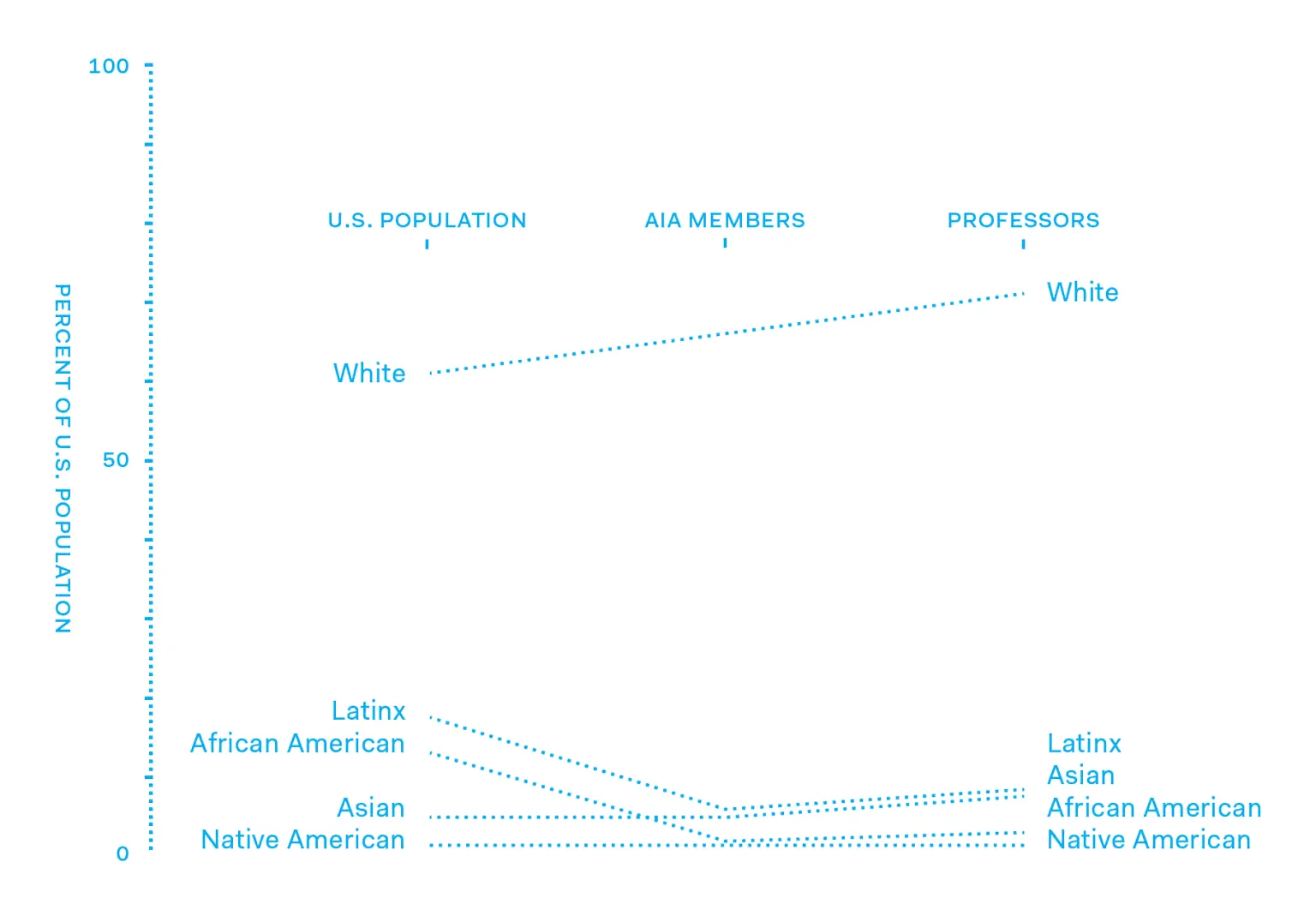
International comparisons make these patterns even clearer. In the United States, the 2017 Annual Report on Architectural Education by the AIA revealed that representation decreases as careers advance: African American and Latinx architects become less visible at higher professional levels, while the proportion of white members and professors increases. In an equitable profession, these lines would be horizontal, but instead they show steep disparities.
In Germany, the situation is compounded by the absence of data. Until recently, there was little information available about the experiences of Black professionals in architecture or related fields. The Afrozensus (2020) was a milestone, capturing for the first time the realities of over one million Black, African and Afro-diasporic people in Germany. It made visible that anti-Black racism is not incidental but a structural and institutional problem. Although not specific to architecture, the survey revealed that three-quarters of respondents reported experiencing racist discrimination based on skin color.
For those of us who studied and work in Europe, these patterns recur again and again. As racialized people, we entered academic institutions that had little sensitivity for racism or colonial narratives within architectural theory and education. These experiences are precisely what led to the creation of BCB in order to counter this invisibilisation, to support each other and to create spaces where our perspectives and knowledge matter.
What are your experiences starting your own project? Why did you decide working as a group?
Black Creative Builders was initiated by Catharina Meier at the beginning of 2020. The idea grew out of her personal experience as a Black female architectural designer working in Switzerland and Germany, where she often felt excluded from conversations about the future of the industry. What began as a vision for a supportive space for Black architects in German-speaking countries soon resonated more widely. After many conversations with Black professionals, it became clear that these experiences were shared across Europe and that the project needed to include people of all genders and from diverse professional backgrounds in the building industry.
The first concrete step was the creation of a WhatsApp group to connect our contacts. By the end of 2020, we held our first meeting with our initial members and since 2021, the network started expanding quickly. That same year, the name Black Creative Builders was developed, along with our logo and brand identity. Since then, we have formed an organizational team, structured the network into sub-groups including one dedicated to womxn to create safer spaces within the community, and grown to more than 60 members across Europe and Africa.
Working as a group was never just a practical choice but a necessity. In predominantly white countries and institutions, uniting as Black professionals allows us to operate in safer spaces, to be visible, to assert our perspectives and to demonstrate our skills and abilities.
Of course, we have faced challenges along the way. It has not always been easy to reach Black professionals in the field and we have had to navigate discrimination, invisibilisation and tokenism. Building an internal structure and distributing responsibilities was another important challenge, but one that ultimately strengthened the network.
The most rewarding moments are those of connection: meeting like-minded people, building lasting relationships and creating events and projects that have received great feedback from our members and communities. These experiences remind us why BCB exists and motivate us to continue shaping spaces that are inclusive, critical and celebratory.
How would you characterize the city you are currently based at as location for practicing architecture?
We are currently based in Berlin, the capital of Germany, which is a very particular place to practice architecture. It is home to three major architecture universities, numerous state organizations and a wide range of private practices, collectives and cultural institutions in the construction field. This density of institutions and actors creates many opportunities for exchange and visibility, while also highlighting how underrepresented Black professionals are in these spaces.
As far as we know, Black Creative Builders is the only Black-led network of its kind operating at this scale in Berlin and Germany. In that sense, we see ourselves as pioneers, opening doors and insisting on a presence where it has historically been missing. The location matters because Berlin is one of the country’s most important hubs for architectural events and debates. For example, in June 2025 we took part in the WIA Festival, which took place across Germany but was strongly anchored in Berlin, where the executive committee and many of the main events were based.
At the same time, even though Berlin is our organizational base and many of our members live here, we do not work exclusively from Berlin. Our network is active in different places such as Munich and at times England. Working across different cities allows us to connect Berlin’s energy with a broader European perspective, making the city both an anchor and a starting point for collaboration.
Name your recommendations…
Our work is shaped by a wide range of influences, from books and theory to buildings, materials and people we consider mentors. A few examples:
Books & Magazines: Manual of Anti-Racist Architecture Education by WAI Think Tank, which has been central in framing critical approaches to education; Radically Simple by Francis Kéré, whose work inspires us through its clarity and rootedness; Black Turtleneck, Round Glasses by Katrin Hartmann and The Intersectional Environmentalist by Leah Thomas, which connects ecological and racial justice.
Mentors & Architects: We have been particularly inspired by Samia Henni, whose research and teaching open up decolonial perspectives in architecture and history.
Buildings & Materials: For us, buildings are less about icons than about practices that center people, context and sustainability. We often return to the use of local and ecological building materials, not only for their environmental value but also for the way they embed spatial memory and cultural continuity into architecture.
These references form part of a wider constellation of influences that connect critical theory with practice and community building with design.
How do you perceive yourself as Black female architects mainly engaged in the organization team of BCB and working in a male dominated field?
As Black female architects working in a male-dominated field, we constantly navigate overlapping barriers of race and gender. These experiences shape the way we organize ourselves and the kind of spaces we want to create.
Gender plays an important role in our work, not least because a large part of our organizational team consists of Black female architects. In 2024, we created a Black womxn-only space within our network as a safer environment, where members can exchange experiences and build solidarity without the pressures of being a minority in male-dominated spaces. We are deeply aware of the intersectional discrimination our members face and we see it as our responsibility to ensure that systemic issues within the profession are also addressed inside our own network.
At the same time, we strongly believe in the importance of connecting with other female networks. We are in exchange with and would recommend communities such as Black Females in Architecture (BFA), Matri-Archi(tecture, Global Women in Architecture, Architektinnen* in Berlin, Frau liebt Bau and N-ails e.V. These spaces provide vital opportunities for solidarity, collaboration and visibility and we see them as part of a wider ecosystem that supports women in architecture.
What needs to change in the field of architecture? How do you imagine the future of a more sustainable architecture in 2050?
We hope to see architecture that grows from its surroundings, with each building reflecting the unique character of its location rather than conforming to a uniform global style. Designs should respond to the local geography and use locally sourced materials, while ensuring the well-being of those who construct them and avoiding any risk to life for the sake of aesthetics.
By 2050, we envision cities where existing spaces are thoughtfully repurposed and new projects are developed in collaboration with local communities, prioritizing their needs over personal fame. Architecture will embrace circular principles, from material reuse to adaptive design, to create resilient, sustainable and inclusive environments.
Sustainability must become a guiding principle of design, not just a marketing tool or a certification. Architects and stakeholders will acknowledge that construction is one of the most polluting industries, viewing sustainable practices as essential rather than optional. In this future, architecture will actively contribute to the health of the planet and the well-being of its inhabitants by shaping spaces that are regenerative, humane and deeply rooted in their context.
What do you want to pass on to the next generation of young architects?
What we want to pass on to the next generation of young architects is, first of all, access to a network of professional creatives and builders they can look to for guidance, collaboration and inspiration. Having such connections can make a decisive difference in a field where Black voices are often marginalized. We now have contact with more experienced professionals, and creating bridges between generations is something we want younger architects to benefit from as well.
We also want them to take systemic issues seriously and to understand the power of togetherness. Architecture is not only about individual projects but also about collective responsibility and solidarity. Recognizing that we are stronger when we work together is an essential lesson for the future of the profession.
Another crucial point is the importance of sustainable building practices. We want the next generation to see sustainability not as an optional extra but as central to architectural practice. Learning from local and ecological approaches and from communities themselves can guide us toward more just and resilient futures.
Above all, we want young architects to feel that they belong and that their voices are heard in this industry. Their perspectives matter and they should be confident that they have the right to shape the spaces and narratives of the built environment.
What is your favorite tool to design/create architecture and why?
Our favorite tool is not a single piece of software but a method: participatory design and co-design. Collaboration is one of our core principles and this approach allows us to place it at the center of our design processes. By challenging top-down structures and prioritizing inclusivity, participatory design creates more equitable, innovative and effective solutions. A good example is the Tubman Hall project, where this method enabled us to design a space that truly responded to the needs of the community.
Participatory design gives voice to those who are often left out of architectural processes. It helps build trust, develop solutions that are more inclusive and reduce the risk of failure by addressing real needs. It also fosters social cohesion, which is essential in the kinds of community-driven projects we engage in.
The tools we use to enable this process range from our virtual collaboration platform, accessible through our online community, to digital design software that helps us translate collective ideas into concrete projects. In this way, both the method and the tools work together to turn participation into tangible architecture.
What person/collective or project do we need to look into right now? Recommend any office/architect/artist that you find inspiring:
There are many inspiring people and collectives who deserve more visibility in architecture right now. Among them, we would highlight Sara Zewde (Studio Zewde, New York) for her powerful integration of landscape, community and memory; Mariam Issoufou (Mariam Issoufou Architects, Niger) for her commitment to socially engaged and context-sensitive architecture; and Nzinga Biegueng Mboup (Atelier Worofila, Senegal) for her ecological design approaches rooted in local materials.
We are also deeply inspired by collectives such as Matri-Archi(tecture)and Black Females in Architecture (BFA), who continue to create international platforms for Black women in the field.
At the same time, we want to share a list of existing networks and resources for Black people in the building industry as well as a broader list of Black women working in the field worldwide. We believe visibility, exchange and access to such networks are crucial for changing the discipline.
Existing networks for Black people working in the building industry:
Name
Black Females in Architecture
Matri-Archi(tecture)
Arquitectas negras
Black Women in Architecture + Design
Black Women in Construction
Black Girl civil engineer
Black Girls draw
African Female Architects
First 500
The Society of Black Architects [SOBA]
Black People in Construction
The Black Landscape Architects Network (BlackLAN)
Black Interior Designers Inc.
Black Artists + Designers Guild
National Organization of Minority Architects
ArchiteXX
Organization of Black Designers
Beyond the Built Environment
BlackSpace
The Designer’s Workshop
Female Design Council
Blacks Who Design
Find further Networks under the following link: architecturaldigest.com/story/professional-resources-black-designers-architects
List of Black women working in the field worldwide:
Name
Abdé Batchati
Adis Ozuna
Afaina de Jong
Akua Danso, Neba Sere, Selasi Setufe
Alyssa K. Barry
Aura Faulkner
Carol Andrea Yousseu
Catharina Meier
Clara Sawadogo Gbodossou
Dominique Petit-Frère
Ilze Wolff
Khensani Jurczok-de Klerk
Kimberly Baah
Lesley Lokko
Mae-Ling Lokko
Madina Scacchi
Mallyn Nelson-Homiah
Marda Meles
Margarida Waco
Mariam Ibrahim
Mariam Issoufou
Mayra Hartmann
Melissa Makele
Mpho Matsipa
Nana Biamah-Ofosu
Natache Iionga
Natasha A. Kelly
Nzinga Biegueng Mboup
Olufemi Hinson
Patti Anahory
Sandra Githinji
Sara Zewde
Tomi Laja
Torkwase Dyson
Valerie Meuwly
Vere Shaba
Vipua Rukambe
Imani Jacqueline Brown
Position
Spatial designer
President of the Soc. of Architects in the Dominican Republic
Architect
Lead BFA
Architect
Multidimensional Designer (Architecture & Lighting Design)
Urban Planner
Architectural Designer (Alidé Studio)
Founder of Archit-Bati Consult
Designer and urbanist (Limbo Accra)
Architect
Lead Matri-archi
Architectural Designer
Architect (African Future Institute)
Architect/Designer
Architect
Interior Designer
Architect (Atelier Dehar)
Architect & Doctoral Fellow at ETH Zurich
Architect (Whispering Walls)
Architect
Civil Engineer
Editor (magazine ARCH+)
Architect
Architect (Yaa project)
Architect-in-training, public space artist, and photographer
Lecturer (UdK), Afrofuturism & Culture
Architect (Atelier Worofila)
Architect (Sah Studio)
Architect
Architect (Sandra Githinji Studio)
Architect (Studio Zewde)
Architect, researcher, writer and sculptor
Artist
Interior Architect
Co-leader Greendesign, part-time with WorldGBC
Architect/Designer
Artist, activist and architectural researcher
Project 1
Community Center Project
Berlin, 2021–2023
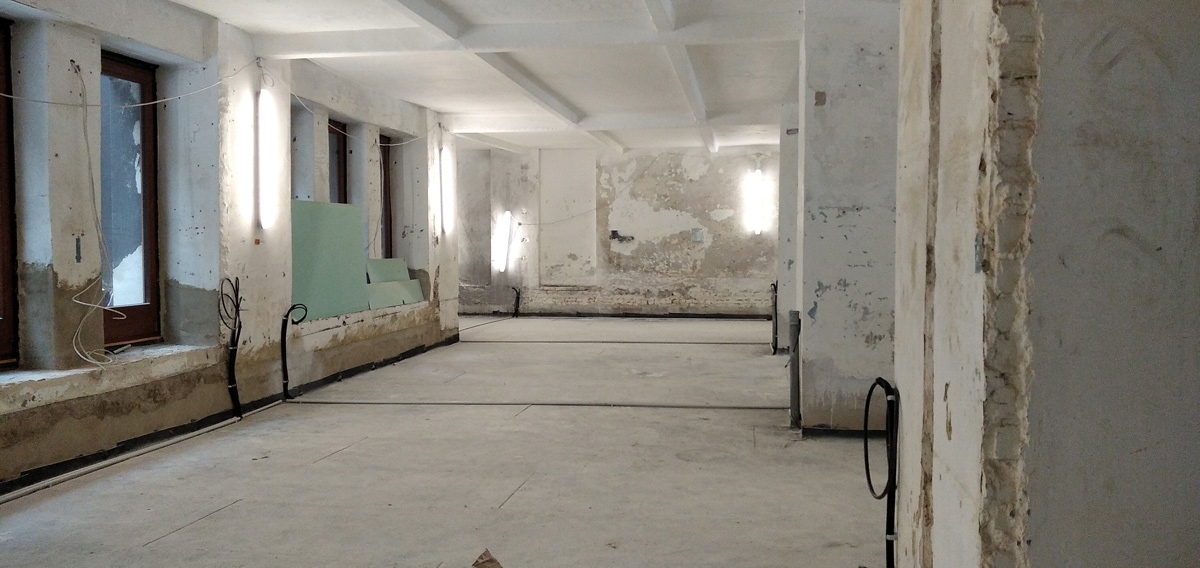
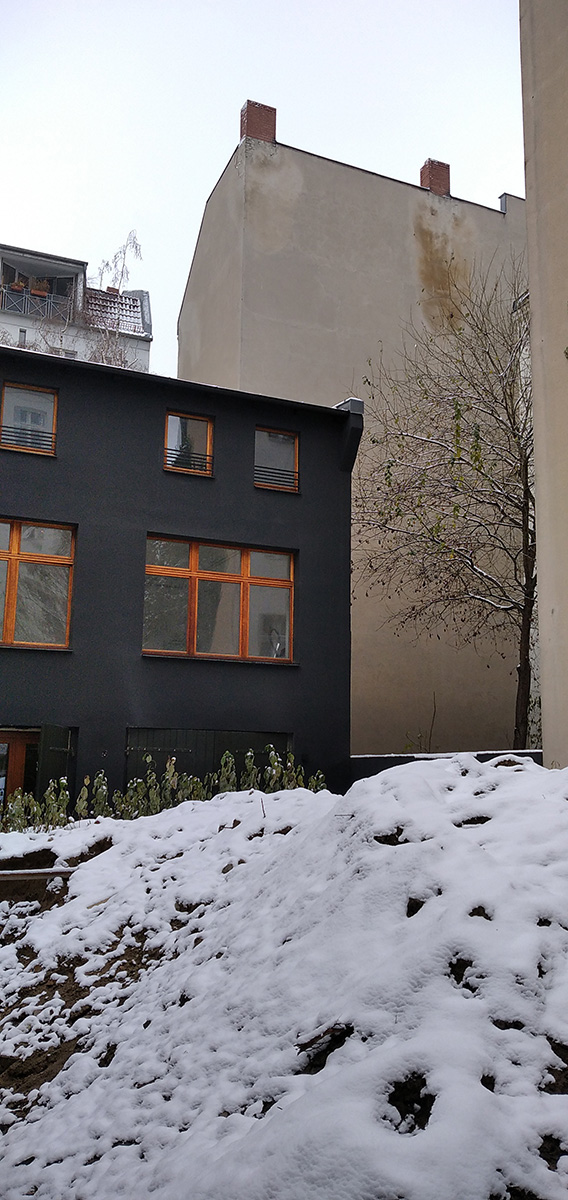
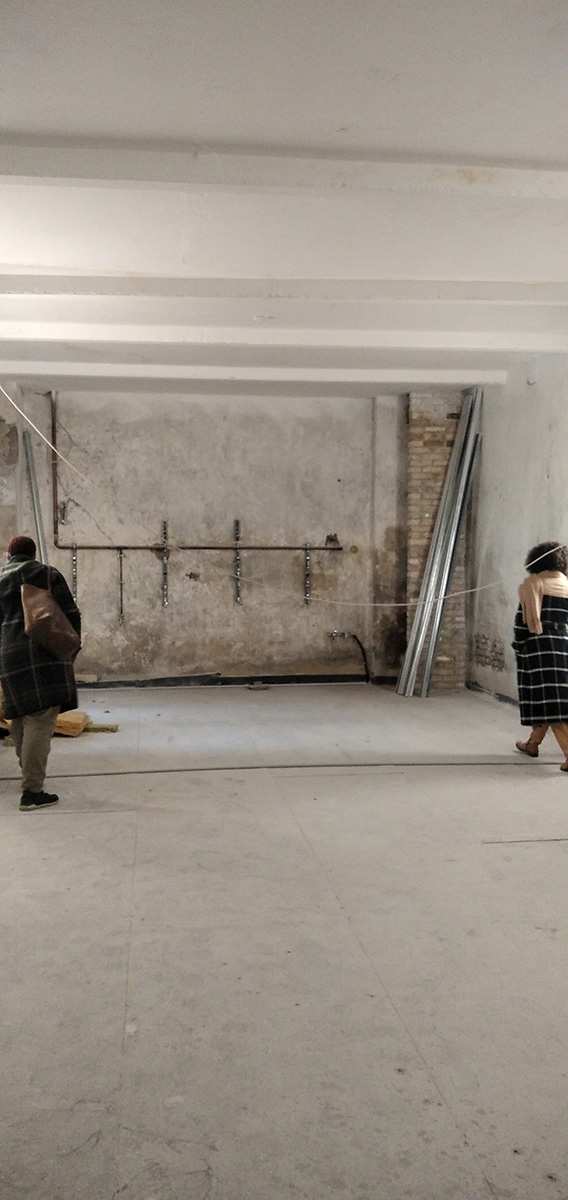
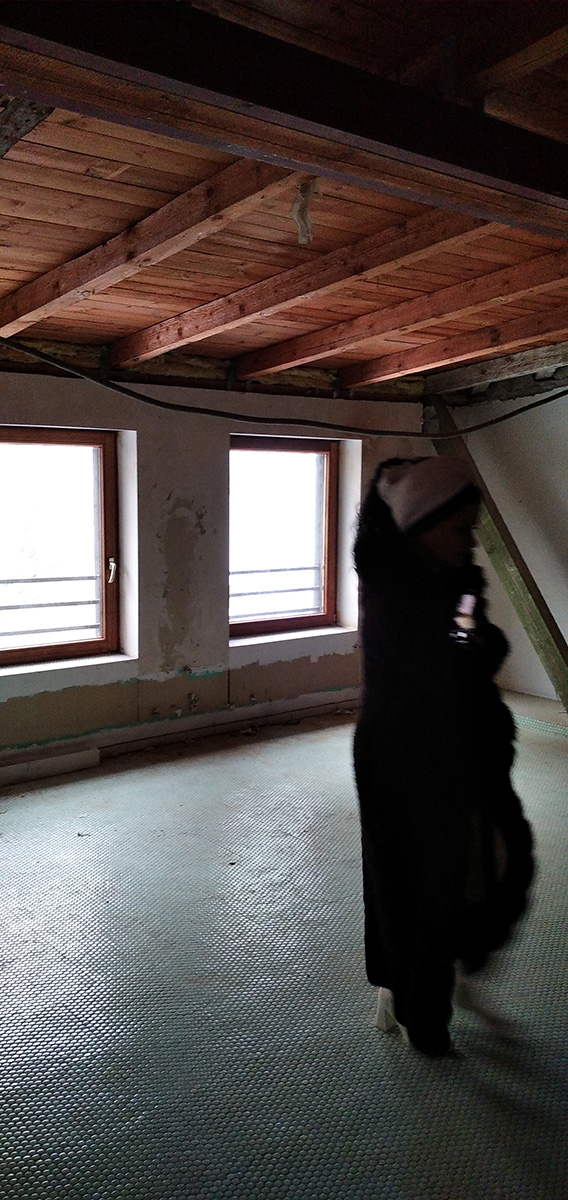
In 2021, Black Creative Builders was invited by the organization Each One Teach One (EOTO) to take part in a site visit of a building they were about to acquire in Berlin. The project aimed to re-stabilizeThe project aims to re-stabilize and transform the existing structure into a community center for People of African Descent (PAD).
BCB contributed to a roundtable with other Black experts and provided input on the spatial program, envisioning a multifunctional center that responds to community needs. Proposed uses included childcare facilities, healthcare services, coworking spaces and areas for Black-owned businesses. Through this contribution, BCB emphasized co-creation, inclusivity and long-term sustainability, ensuring that the building would become a resilient hub for social, cultural and economic empowerment.
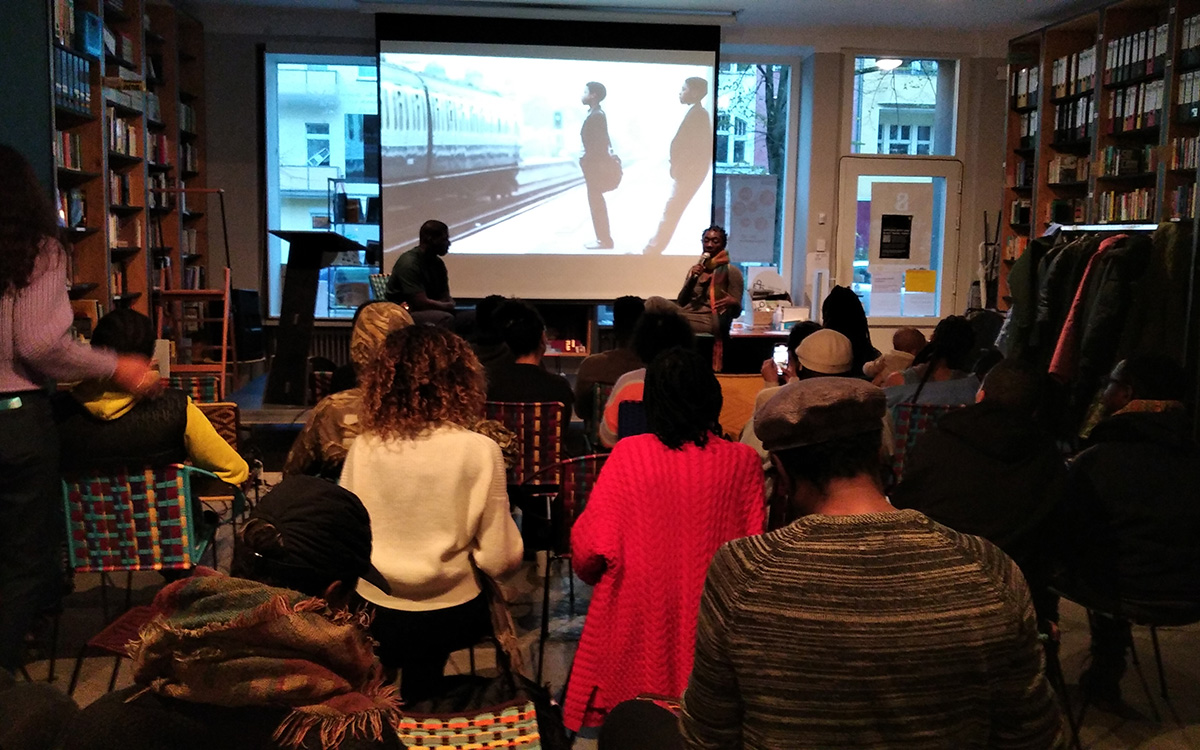
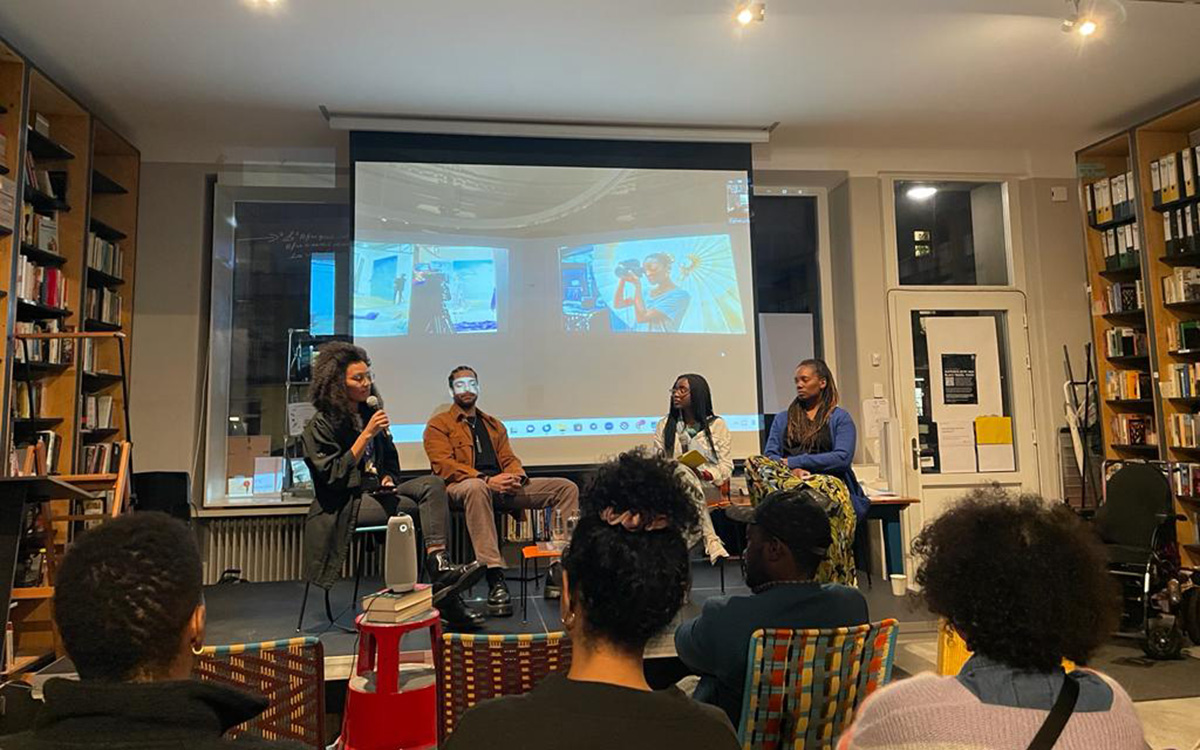
The participatory process was further deepened in 2023 with the event “Building Black Spaces” in November 2023, which brought together community actors, Black professionals from the construction industry including architects, urban planners, engineers and lighting designers in Berlin. The discussion focused on how we as a community can design spaces for us, by us, highlighting opportunities and challenges in shaping community centers. This exchange created an important platform for dialogue and collaboration, reinforcing the vision of the Community Center as both a practical and symbolic space of belonging for Berlin’s Black communities.
Site visit of the community center
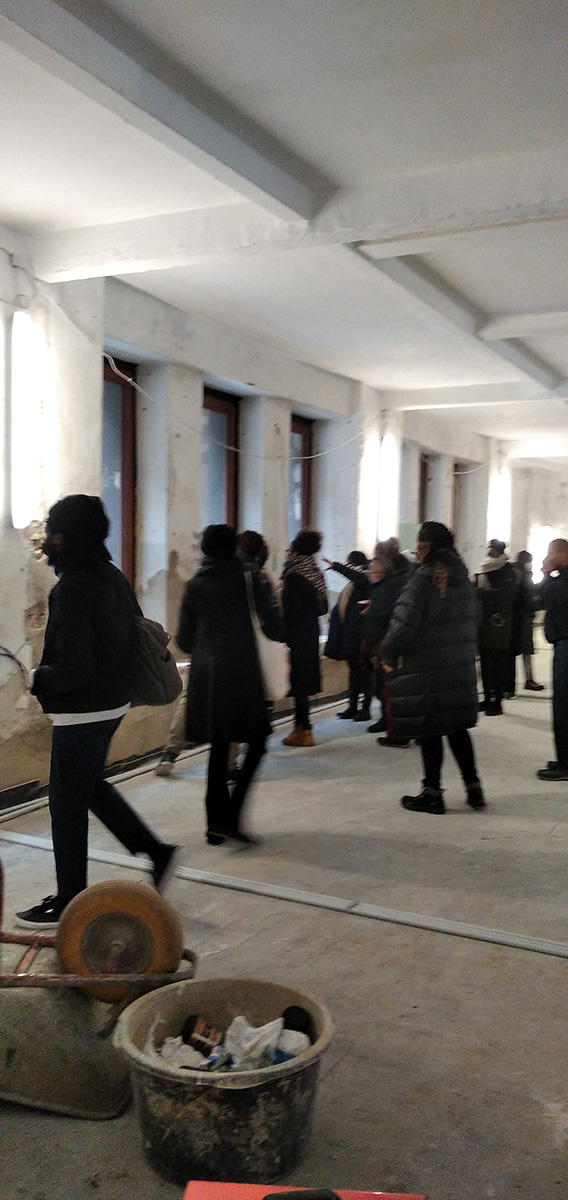
Event Building Black Spaces
Project 2
Tubman Hall Project
Berlin, 2022
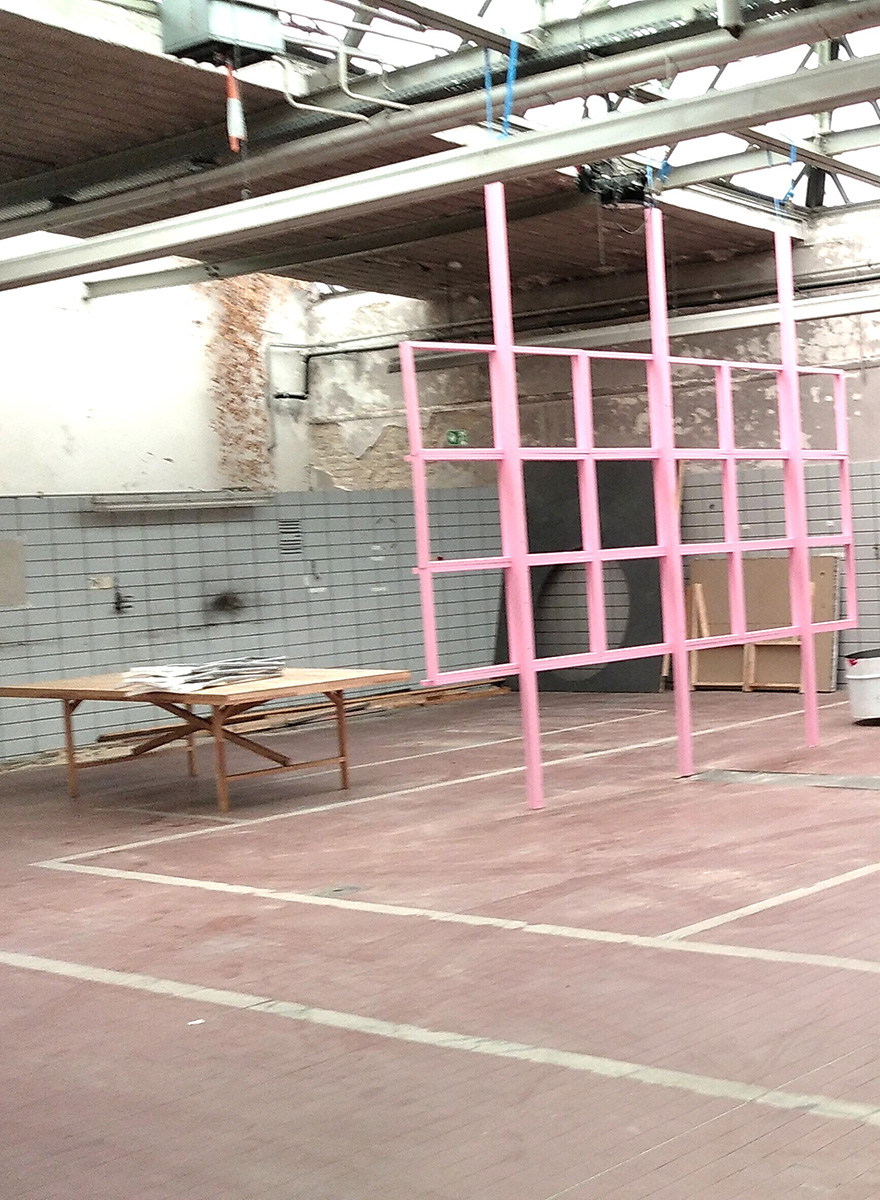
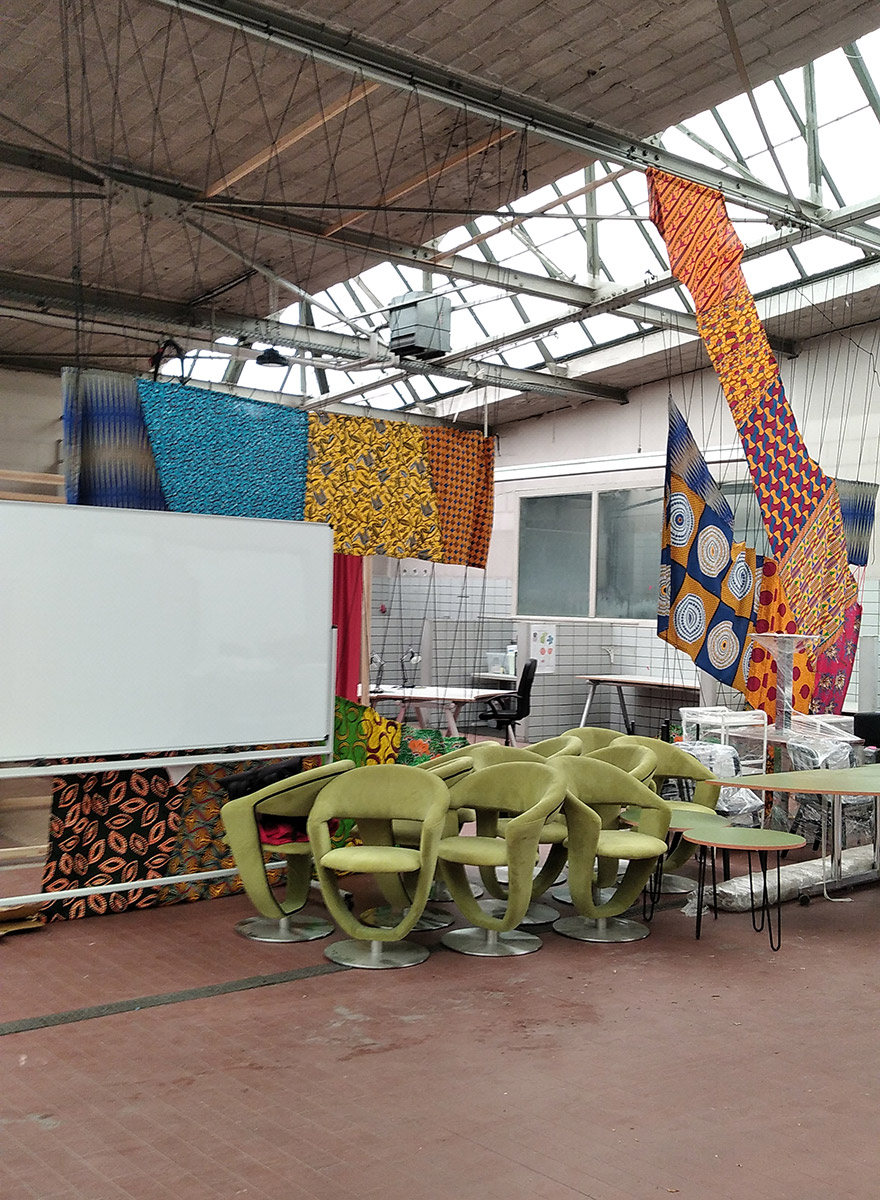
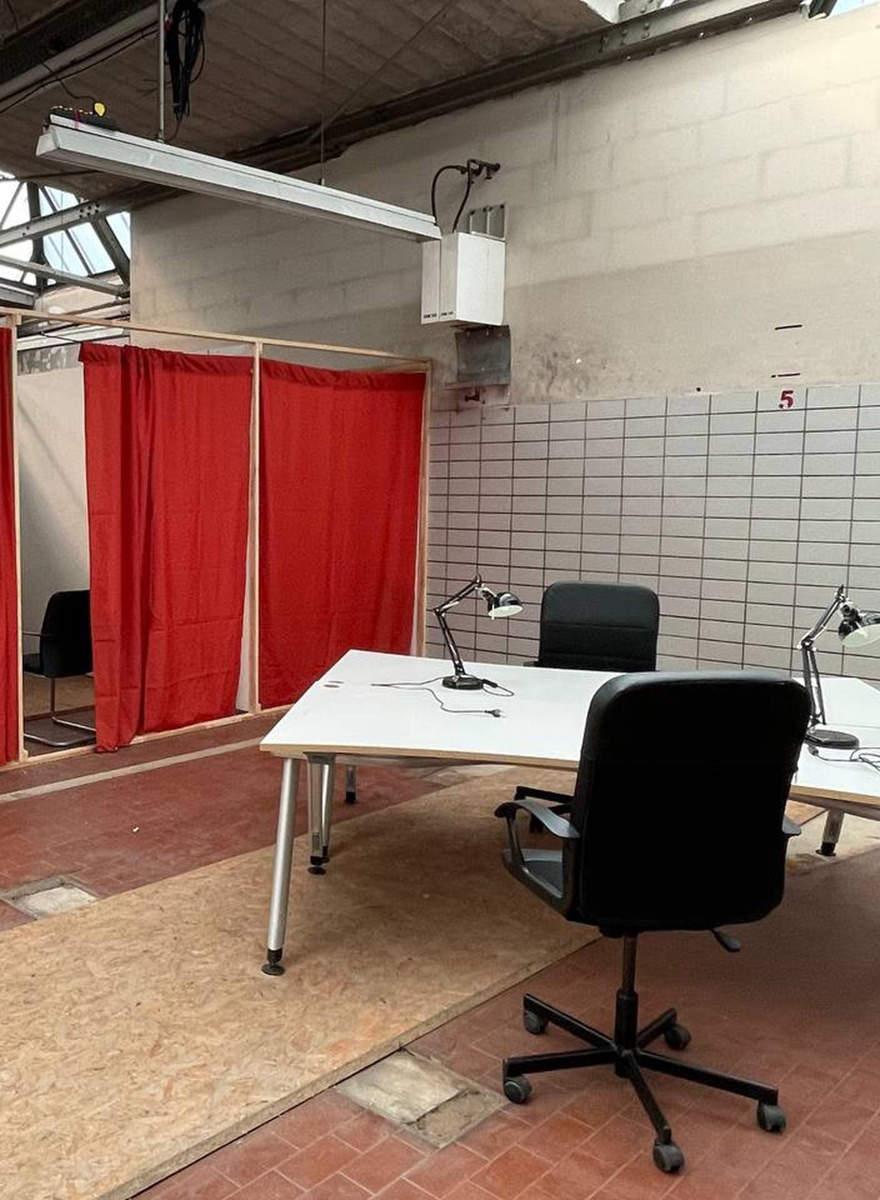
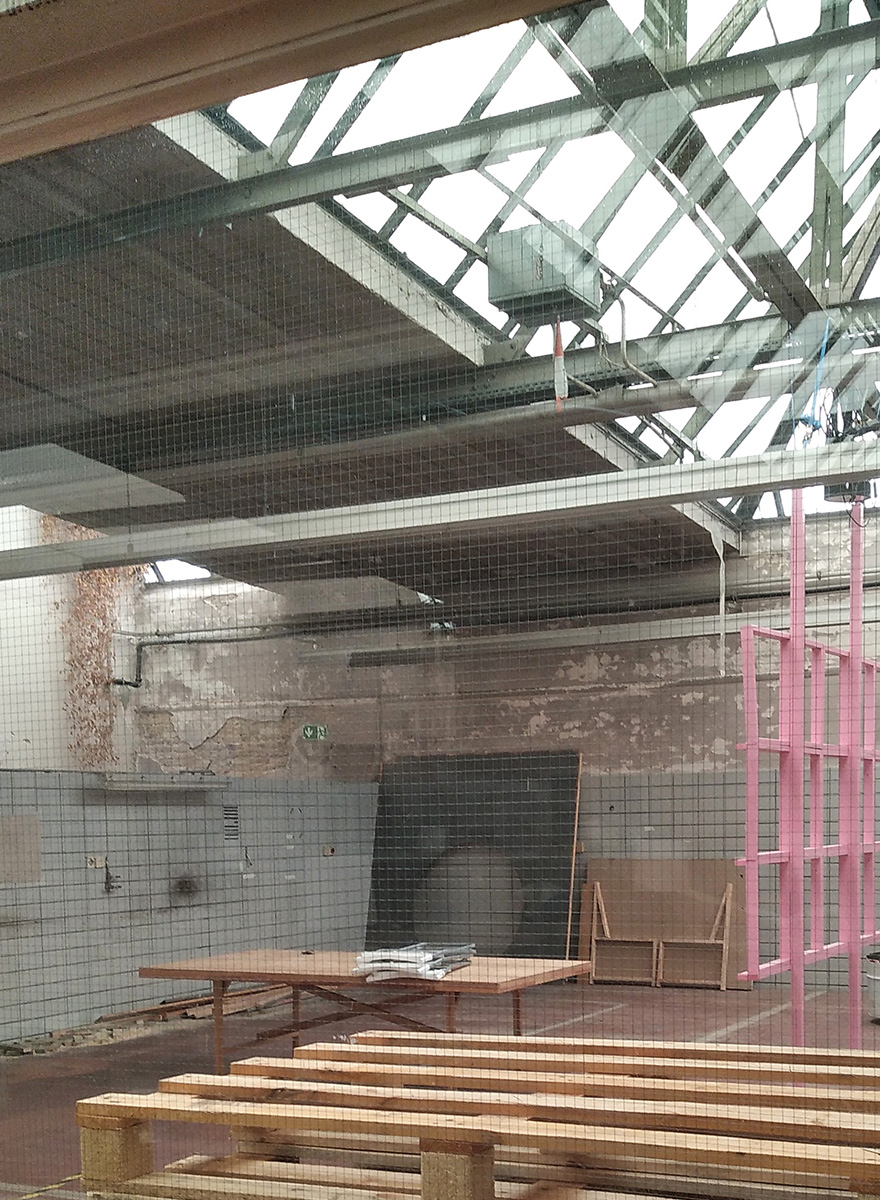
In spring 2022, shortly after the outbreak of the war in Ukraine, Black Creative Builders joined forces with the Tubman.network to support BIPOC refugees fleeing the conflict. The Adlerhalle in Berlin was transformed into Tubman Hall, a community-led temporary emergency architecture project.
BCB members contributed to its design and coordination together with Mandu dos Santos Pinto, from early preparatory planning in June 2022 to the final presentation and official opening in July. The project was presented during a common event with Engineers Without Borders Germany in 2022, underlining the collaborative spirit behind Tubman Hall.
All materials and furniture used for the transformation were based on donations, reflecting the collective solidarity of the wider community involved in the project. Beyond the organization Tubman.network providing shelter and services to over 2,500 people, the hall offered additional space for co-working and community activities, alongside cultural events, workshops and advocacy initiatives that supported the continued use of the venue.
Though the space closed in October 2022, Tubman Hall became a vital precedent for how architectural expertise, activism and solidarity can intersect to provide urgent, community-driven responses in times of crisis.
Site of the Tubman Hall